
AI Guide
This is the main note for my AI Guide.

This is the main note for my AI Guide.

This note explains why time-scale separation is key in cascaded control, and how it helps you avoid unexpected oscillations when stacking controllers. It gives an intuitive rule of thumb (and where it comes from) so you can design inner and outer loops that play nicely together—whether you’re tuning simple PIDs or building more advanced control layers.

This is the main note for my Control Systems Guide.
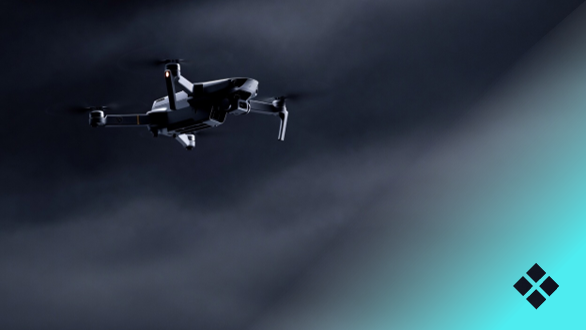
This note shows how to use quaternions to track a drone’s 3D orientation in a clean, implementation‑friendly way, starting from gyroscope data and then correcting drift with the accelerometer (and later the magnetometer). It walks through the math and the approximations step by step, so you can turn raw IMU readings into a stable attitude estimate that actually runs on an embedded controller.
TLDR : This note introduces quaternions as the natural 4D extension of complex numbers for handling 3D rotations, starting from the familiar 2D case. It shows how to build rotation quaternions and apply them to vectors, giving you a clean, mathematically sound way to represent orientations and rotations in 3D space without relying on Euler angles.

This note gives a geometric, engineer-friendly view of nonlinear optimization and shows how the Lagrangian turns “constraints plus objective” into a single analytical object. Along the way, it builds up the ideas of Lagrange multipliers and KKT conditions step by step, so you can see them as sensitivity measures and practical optimality checks rather than abstract math.